
 Base Papers LTD
Waste paper recycling turns used cardboard, office paper, and newspaper into fresh paper products instead of sending them to landfill. Mills break the paper into pulp, clean out the dirt and ink, and press it back into sheets. This guide explains each step in plain words, shows the latest recycling numbers, and covers which paper grades are worth the most. You will also find four comparison tables, practical checklists, and short answers to common questions.
basepapers wrote this guide for business owners, facility managers, and buyers who handle paper every day and want to do it better.

What Is Waste Paper Recycling and How Does It Work?
Paper is made of cellulose fibers. Those fibers can be separated from used paper, cleaned, and rebuilt into new sheets. That is the whole idea, and the process follows a clear order.
Picture a box that arrived at a warehouse last week. Staff flatten it, drop it in a cardboard bin, and a collector hauls it to a mill. A few days later, its fibers may be part of a new shipping box.
| Stage | What Happens |
| Collection | Paper is gathered from homes, offices, and businesses, then combined into large loads |
| Sorting | Loads are graded by type; poor-quality loads can be rejected |
| Pulping | Paper is shredded and mixed with water so the fibers separate |
| Cleaning and screening | Staples, tape, and plastic film are removed from the pulp |
| De-inking | Air bubbles and chemicals lift ink out of the pulp, if needed |
| Pressing and drying | Heated rollers remove water and form continuous sheets |
Not every grade needs every step. Cardboard usually skips de-inking, while white office paper often goes through it.
Why Waste Paper Recycling Matters: Key Numbers
Paper is one of the most recycled materials in the world, and the data shows steady results. The American Forest & Paper Association (AF&PA) reported that about 45 million tons of paper were recycled in the U.S. in 2025, roughly 123,000 tons every day. That included more than 33 million tons of cardboard.
The AF&PA announcement puts the 2025 paper recycling rate at 61% to 65%, and the cardboard rate at 70% to 75%. U.S. mills used 31.4 million tons of recycled paper, down 1.3 million tons from 2024. Demand moves from year to year, which is why prices for bales also move. AF&PA president and CEO Heidi Brock called paper recycling “one of America’s success stories.”
Europe reports a higher rate. The European Paper Recycling Council, through CEPI, gave 75.1% for 2024 in its summary and says the sector is on track for a voluntary target of 76% by 2030. EPRC chair Valeria Salvadori said it plainly: “Paper is the most recycled material in the EU.”
| Region | Reported Rate | Year |
| United States (AF&PA) | 61% to 65% (cardboard 70% to 75%) | 2025 |
| United States (EPA) | 68.2% for paper and paperboard | 2018 |
| Europe (EPRC) | 75.1% | 2024 |
These figures come from different methods and years, so do not compare them line by line. Together they show the same trend: most paper is recovered, and the gap is in how clean and well sorted it is.
The U.S. EPA shows what is at stake. In 2018, the country generated 67.4 million tons of paper and paperboard, 23.1% of all municipal solid waste. About 17.2 million tons still went to landfill.
One widely quoted estimate from Green Tumble lists what a metric ton of recycled paper can save. Treat these as rough figures, since results vary by mill and paper grade:
- About 19 trees
- About 29,000 liters of water
- About 2.68 cubic meters of landfill space
- About 4,400 kWh of energy
Why Businesses Choose Waste Paper Recycling
The reasons go beyond the environment. Recycling can lower disposal costs, because every ton that stays out of the trash is a ton you do not pay to haul to landfill.
Clean cardboard can also bring in income when it is sold by the bale, although prices change with market demand. Some customers also ask suppliers how they handle packaging waste, and a clear routine gives you a ready answer.

Paper Grades and What They Become
Paper is not one product. Mills buy it by grade, and each grade has its own value and use.
| Grade | Common Examples | Often Becomes |
| Old corrugated cardboard (OCC) | Shipping boxes, cartons | New boxes and containerboard |
| White office paper | Printer paper, letterheads | New printing paper, tissue |
| Mixed paper | Magazines, catalogs, junk mail | Paperboard and packaging |
| Newspaper | Daily papers, flyers | Newsprint and molded packaging |
Containerboard matters most here. AF&PA says nearly half of all recycled paper goes into it, so box makers are a big buyer. Prices for each grade move with demand, so ask for current quotes instead of relying on old numbers.
Paper cannot be recycled forever. Each pass makes the fibers shorter and weaker. WorldAtlas cites estimates of three to six times for tree fibers, and EPA figures of five to seven times for paper in general. Long fibers last longest, which is why office paper and magazines are valued highly. Mills still need some fresh fiber to keep the cycle going.
Common paper that is usually accepted:
- Cardboard boxes and cartons
- White and colored office paper
- Newspapers and magazines
- Paper bags
- Envelopes without large plastic windows
- Catalogs and junk mail
What Spoils a Load: Contamination
Contamination is a frequent reason a load is downgraded or rejected. Good waste paper recycling starts at the bin, long before the mill sees the paper.
| Contaminant | Why It Causes Trouble | What to Do |
| Food grease and wet paper | Fibers weaken and clump | Keep soiled paper out |
| Plastic film and tape | Clogs screens at the mill | Remove large pieces |
| Staples and clips | Metal must be screened out | Remove large metal items |
| Mixed trash | Lowers the grade or gets the load rejected | Use labeled bins |
Moisture is a quiet problem. A bale left outside in the rain can lose value fast, so store paper dry and covered.
Practical Tips for Businesses
A small change in daily habits often improves quality more than any new equipment. A packaging warehouse, for example, can raise its bale quality simply by separating clean cardboard from mixed office waste.
How to Start Waste Paper Recycling at Your Business
Follow these steps:
- Check what kinds of paper your site throws away each week
- Place clearly labeled bins where the paper is created
- Keep cardboard separate from office paper
- Flatten boxes to save space
- Store paper dry and away from food waste
- Ask your collector which grades they accept and how they want them delivered
Review the results after the first month. Check the bins for wrong items, ask staff what confuses them, and adjust the labels. A photo of accepted items on each bin is easy to follow and takes minutes to set up.
Common Mistakes to Avoid
Most quality problems come from a few habits:
- Tossing greasy food boxes in the paper bin
- Bagging paper in plastic bags
- Storing bales outside without cover
- Mixing glass, metal, or food waste with paper
- Assuming all paper grades have the same value
Baling, Storage, and Transport
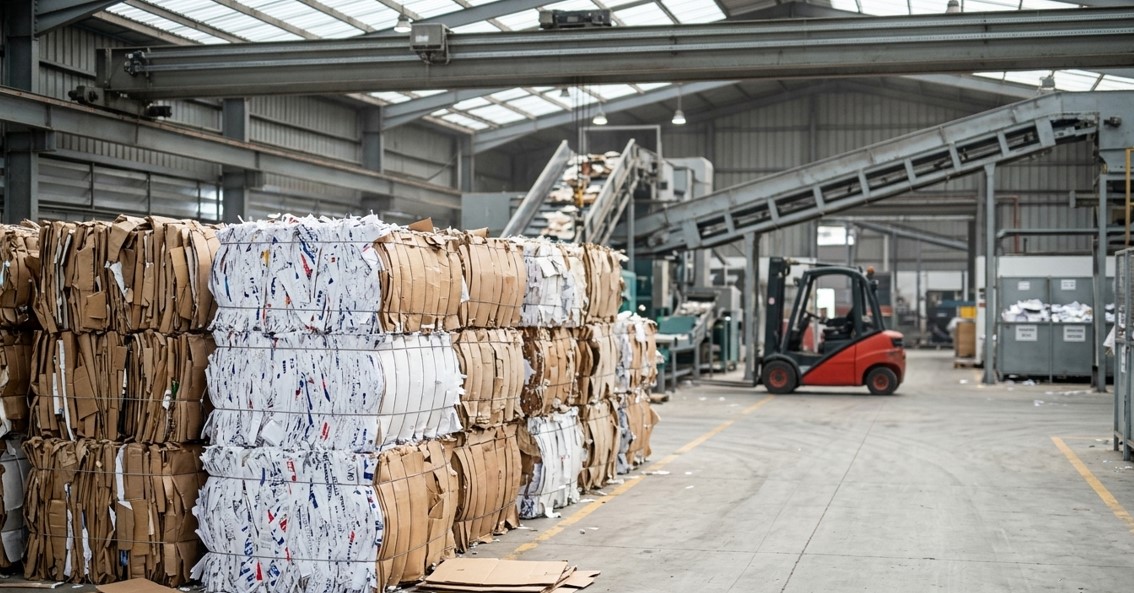
Loose paper takes up a lot of room and costs more to move. Businesses that handle volume usually press their paper into bales with a baler. A tight bale stacks safely, loads onto a truck more efficiently, and is easier for a buyer to grade.
Keep bales on a dry, flat surface, away from heat and open flames. Paper burns easily, and a damp bale can grow mold and lose value. Label each bale by grade so nobody has to guess what is inside.
Questions to Ask a Paper Supplier or Buyer
If you buy or sell recycled paper in bulk, a few questions prevent most disputes:
- Which grade is being supplied, and what is the moisture limit?
- What are the bale size and weight?
- What contamination level is acceptable?
- How often is pickup or delivery scheduled?
- What documents come with each shipment?
- How are quality problems handled?
Three Myths About Paper Recycling
“Recycled paper is always low quality.” Quality depends on the grade and the process. Recycled fiber already goes into a large share of packaging, and AF&PA says nearly half of all recycled paper ends up in containerboard.
“One staple ruins a batch.” Mills screen out small staples during pulping. Large metal pieces and plastic are the bigger concern, so remove those.
“Paper can be recycled forever.” It cannot. Fibers wear down with every pass, which is why mills keep adding some fresh fiber.
How basepapers Can Help
Most paper disputes come down to one thing: the grade on paper did not match the grade in the bale. basepapers starts with those details.
If your business handles waste paper recycling at scale, share your volumes, paper types, and quality needs. From there, the team can help you think through grade, supply, and quality questions before an order is placed. Please confirm final specifications and terms directly with the team. You can also browse our [Internal link: basepapers products page].
Frequently Asked Questions
Can all paper go into waste paper recycling?
No. Greasy food paper, wet paper, and paper with heavy plastic or foil coating cause problems at the mill. Keep those out of the paper bin.
How many times can paper be recycled?
Estimates run from about three to seven times, depending on the paper and the source. Fibers get shorter with each pass.
What is the difference between OCC and mixed paper?
OCC is old corrugated cardboard, such as shipping boxes. Mixed paper covers items such as magazines, catalogs, and junk mail.
Does shredded paper get recycled?
Often yes, but ask your collector first. Shredded paper is handled differently from whole sheets because the fibers are cut short.
What is the U.S. paper recycling rate?
AF&PA reported a 2025 rate of 61% to 65%, with about 45 million tons recycled.
Final Thoughts on Waste Paper Recycling
Most used paper has a second life if it stays clean, dry, and sorted. The numbers show that collection is already strong, so the biggest gains now come from quality.
Start with an honest look at what your site throws away, label your bins, and keep cardboard away from food and moisture. Ask your buyer or collector what they need, and match your habits to it.
If you need help with grades, supply, or quality questions, basepapers is ready to help.