
 Base Papers LTD
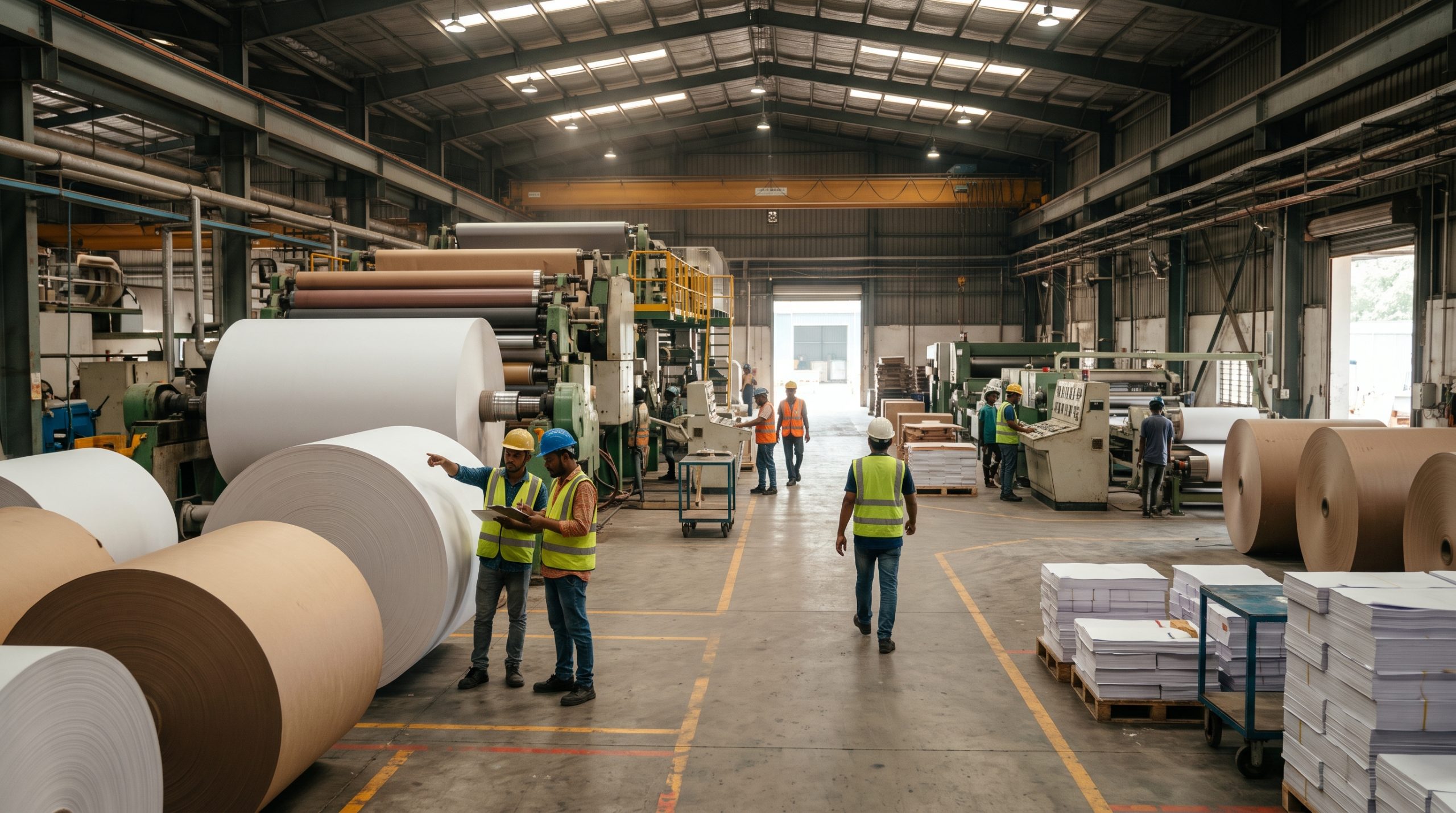
Packaging, printing, tissue, cartons, notebooks. Almost everything a factory ships or a shop sells depends on paper. If you buy it in volume, choosing between paper manufacturers in Bangladesh is a decision that touches cost, quality, and delivery every single month.
This guide gives you the full picture. It covers the size of the industry, the challenges behind price changes, the paper types available, and a practical way to compare suppliers.
Here is what you will get from this article:
- A clear overview of paper manufacturers in Bangladesh
- Key industry numbers on mills, capacity, and exports
- Why paper prices move, and what buyers can do about it
- The difference between virgin and recycled paper
- A checklist for comparing mills
- How Base Papers Limited fits into the market
- Answers to common questions
The Paper Industry in Bangladesh at a Glance
Bangladesh has a large, mature paper sector. According to The Financial Express, the country has 105 registered private paper mills, and about 70 of them are operating.
The same report puts annual production capacity at about 1.6 million tonnes, against domestic demand of about 0.6 million tonnes. The domestic market is estimated at about Tk 55 billion.
| Indicator | Figure |
|---|---|
| Registered private paper mills | 105 |
| Mills currently operating | About 70 |
| Annual production capacity | About 1.6 million tonnes |
| Domestic demand (estimate) | About 0.6 million tonnes |
| Domestic market size | About Tk 55 billion |
| Cumulative industry investment | About Tk 700 billion |
Estimates differ between sources, so treat these as a guide, not a final census. The message is still clear: paper manufacturers in Bangladesh can supply more than the home market needs.

Exports: A Growing but Uneven Story
Paper is also an export product. The Financial Express reports that exports were $285.83 million in FY2024-25, then fell 12.88 percent to $249.01 million in FY2025-26.
| Fiscal year | Paper and paper product exports |
|---|---|
| FY2021-22 | $105.10 million |
| FY2022-23 | $229.41 million |
| FY2023-24 | $273.06 million |
| FY2024-25 | $285.83 million |
| FY2025-26 | $249.01 million |
Shipments go to more than 50 countries. Main products include tissue paper, paper cups, paper bags, and cartons. For local buyers, this shows that paper manufacturers in Bangladesh already sell into demanding foreign markets.
Why Paper Prices Move
Many buyers ask why quotes change so often. Three forces matter most.
- Imported raw materials. The Financial Express notes that most mills rely heavily on imported pulp.
- Energy and transport costs. These have risen significantly, according to the same report.
- Currency and import conditions. Bashundhara Paper Mills reported that production fell in FY2024-25 because of a shortage of imported raw materials, and capacity use was only 33 percent, according to The Pulp and Paper Times.
A mill executive quoted in the export report put the pressure plainly: “how can we match the buyer’s price?” when foreign prices are lower.
What can you do? Ask suppliers how they source fiber, how long they can hold a quote, and what happens if costs change. Paper manufacturers in Bangladesh that use local waste paper may have more stable inputs than those that rely only on imported pulp.
What Paper Do Mills in Bangladesh Make?
Product ranges vary among paper manufacturers in Bangladesh. These are the main groups you will see.
| Paper group | Common uses |
|---|---|
| Printing and writing paper | Books, notebooks, office paper |
| Packaging paper | Cartons, corrugated boxes, bags, wrapping |
| Tissue and hygiene paper | Toilet tissue, napkins, facial tissue |
| Specialty paper | Cups, labels, and coated products |
Packaging is the biggest growth area for buyers working with paper manufacturers in Bangladesh. For a deeper look at one grade, see Base Papers’ kraft paper buyer’s guide.
Virgin Paper vs. Recycled Paper
Paper manufacturers in Bangladesh make paper from fresh wood pulp or from recycled fiber. Both have a place.
| Feature | Virgin fiber paper | Recycled fiber paper |
|---|---|---|
| Raw material | Fresh pulp, often imported | Waste paper and old cartons |
| Strength | Very high | Good, depends on grade |
| Environmental footprint | Higher | Lower |
| Cost stability | Exposed to import prices | Can use local waste paper |
Recycled paper has improved a lot. One common process is deinked pulp, or DIP, which removes ink from used paper so it can be turned into new sheets. You can read more in Base Papers’ guide to DIP paper and its article on waste paper recycling.
How to Choose Among Paper Manufacturers in Bangladesh
Do not choose on price alone. Use this checklist.
| What to check | Why it matters |
|---|---|
| Product range and grades | Make sure the mill makes what you need |
| Certifications | Shows quality and environmental discipline |
| Delivery record | Late paper stops your production line |
| Sample quality | Test on your own machines |
| Pricing terms | Know how long a quote stays valid |
| Environmental practice | Matters for export buyers and audits |
Questions to Ask Before You Order
- Which grades and weights do you supply?
- What is your minimum order quantity?
- How do you control quality from batch to batch?
- How long can you hold your quoted price?
- Can I visit the mill or review a sample first?
A good supplier will answer openly. Be careful with paper manufacturers in Bangladesh that avoid details.

Look for Real Credentials
Certificates matter. Standards like ISO 9001 (quality management) and ISO 14001 (environmental management), published by the International Organization for Standardization, are widely used by industrial buyers. Local licenses and BSTI approval also show a mill is operating legally. Always ask to see the paperwork. Good paper manufacturers in Bangladesh keep these documents ready.
Common Mistakes Buyers Make
Even experienced buyers slip up. Watch out for these:
- Picking the lowest quote without testing a sample
- Ignoring how a mill sources its fiber
- Forgetting storage conditions, since moisture weakens paper
- Relying on one supplier with no backup
Talk openly with paper manufacturers in Bangladesh about your use, volumes, and delivery needs before you commit.
Tips for Buying Paper Locally
Buying from local mills has real advantages. Delivery is faster, communication is easier, and you can visit the factory. Here is how to get the most from paper manufacturers in Bangladesh:
- Build a relationship, not just a transaction
- Plan orders ahead of peak seasons
- Keep a backup supplier for urgent needs
- Review quality together after every few deliveries
Open communication helps both sides. The best paper manufacturers in Bangladesh want long-term buyers, so share your forecasts early.
Why Choose Base Papers Limited?
Base Papers Limited is one of the paper manufacturers in Bangladesh producing deinked pulp (DIP) paper, focused on 100 percent recycled paper. Its tagline is “Paper that keeps your world clean.”
The factory is in Dhamrai, Dhaka, and the head office is in Gulshan. The company describes a zero pollution process and a zero-discharge effluent treatment plant. You can read more in its sustainability article and its post on zero discharge ETP.
Its website lists a long set of credentials:
- ISO 9001:2015 (quality management)
- ISO 14001:2015 (environmental management)
- Global Recycled Standard
- BSTI approval
- Factory, fire, boiler, and export and import registration licenses
Base Papers also announced a partnership with Apex Footwear. For dealers and resellers, see how to choose a paper dealer and partnering with local dealers.
If you are comparing paper manufacturers in Bangladesh, ask Base Papers about the grades, weights, and quantities you need. You can also browse the products page or contact the team.
Contact Base Papers Limited:
- Head Office: 106 Gulshan Avenue, 5th Floor, Hosna Center, Dhaka 1212
- Factory: Sreerampur, Kalampur, Dhamrai, Dhaka 1351
- Phone: +88 01779472094
- Email: info.basepapers@gmail.com
- Website: basepapers.co
Frequently Asked Questions
How many paper manufacturers in Bangladesh are there?
The Financial Express reports 105 registered private paper mills, with about 70 operating.
Who are the biggest paper manufacturers in Bangladesh?
The same report names Bashundhara, Meghna, Amber, and Magura among the major exporters. Size is not the only factor. Choose the supplier that fits your grade, volume, and delivery needs.
What paper products are made in Bangladesh?
Mills make printing and writing paper, packaging paper, tissue, and specialty products. Export products include tissue, paper cups, paper bags, and cartons.
Is recycled paper good enough for packaging?
For many uses, yes. Quality depends on the grade and the mill’s process. Ask for samples and test them on your own machines.
How do I choose between paper manufacturers in Bangladesh?
Compare product range, certifications, sample quality, delivery record, and price terms. Ask how each mill sources fiber and how long it can hold a quote.
Wrapping Up
Bangladesh has plenty of paper capacity, but paper manufacturers in Bangladesh still differ in quality, pricing, and reliability from mill to mill. Know your needs, test samples, and ask direct questions.
Choose paper manufacturers in Bangladesh that are open about their process, their credentials, and their limits. Do that, and your supply chain will be steadier and your costs easier to plan.
Ready to talk about your paper needs? Contact Base Papers Limited at basepapers.co.
Sources: The Financial Express (Export Promotion Bureau data); The Pulp and Paper Times; ISO; Base Papers Limited.